
Lead Strategy Division In partnership with HeyWebPS Labs June 6, 2026
Outdated Local Search Methods
- Repeating a single keyword variation at fixed density levels
- Writing generic copy to hit high-volume search lists
- Flat site structures with isolated pages and weak linkages
Modern Vector Implementations
- Mapping mathematical entity coordinates in vector space
- Utilizing deep neural pipelines to address user intent
- Establishing complete semantic networks via dynamic schema
Welcome to the absolute frontier of modern organic growth. Implementing a real system for AI-Driven Semantic Search Optimization is the most important step your business can take today. If your marketing division is still optimizing web pages by manually repeating individual search phrases across paragraph structures, you are practically invisible to modern indexing engines. The rapid rise of Google’s AI Overviews, the widespread adoption of Retrieval-Augmented Generation (RAG) models, and the evolution of vector-based retrieval systems have permanently dismantled traditional search architectures. At HeyWebPS, we operate on a fundamental truth: modern search algorithms do not match characters; they map conceptual connections.
To survive this paradigm shift, enterprise-scale domains and growing brands must rebuild their digital architectures. Instead of relying on old agency models that treat content production like a manual assembly line, successful platforms leverage automated semantic mapping, advanced entity recognition systems, and context-rich linking structures. For those looking to secure an elite partner to build these pipelines, options exist to Hire Freelancer For AI SEO or directly source a highly specialized AI SEO Consultant In Delhi NCR. These technical experts craft complex, data-backed frameworks that communicate cleanly with neural search engines, transforming raw data into long-term search authority.
“Search engine crawlers are no longer simple dictionary indexing engines. They are cognitive vector networks seeking complete, structurally linked knowledge graphs that provide immediate, authoritative solutions to complex user problems.”
Why Old SEO is Failing: The Power of AI-Driven Semantic Search Optimization
The internet is too big for old search engine models to handle anymore. In the past, Google used to look for matching letters on your page. If you typed the phrase “best cheap shoes,” Google would simply search for pages that had those exact words in order. This was called string matching.
But things have changed completely. With modern AI models, search engines now read your website like a human expert does. They do not just look at your words; they try to understand what your words actually mean. This is why we need to focus on AI-Driven Semantic Search Optimization. It helps us explain our business in a way that modern AI systems can easily understand and measure.
The Core Tech Behind AI-Driven Semantic Search Optimization
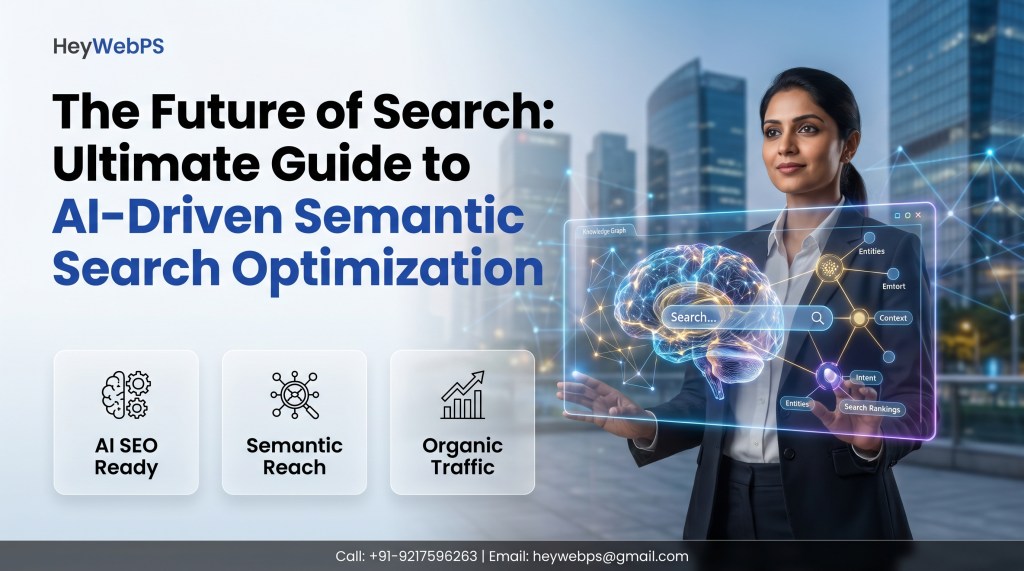
How does this AI look under the hood? It uses complex mathematical structures called vectors. Imagine every topic in the world is placed on a giant 3D map. Words with similar meanings are placed very close to each other. When a user asks a question, Google doesn’t just search for exact words. It looks at that 3D map and finds the closest topics to that question. If your page does not cover those related topics, you will never show up in search results.
The Core Idea: Words vs. Real-World Connected Meanings
In modern search tech, we talk about entities instead of keywords. An entity is a real thing, like a person, place, tool, or concept, that has a clear meaning. For example, “Google” is an entity, “SEO” is an entity, and “Web Design” is another entity.
When you write an article, search engines do not just count your target words. They look for all the connected entities that should naturally be there. If you write an article about how to bake a cake, but you never mention “oven,” “flour,” “temperature,” or “pan,” search engines will realize your content is too simple or poorly written. They will assume you do not have real expertise.
Setting Up Your AI-Driven Semantic Search Optimization Blueprint
To build a real blueprint for your site, you must change how you plan your content. You cannot just pick a single word and repeat it over and over. You must map out all the related terms that help define your main topic. This is where a professional Local Digital Marketing Expert Near Me can help you tremendously. They can find the exact concepts that your local audience is searching for and arrange them in a logical structure that search engine crawlers can scan in seconds.
Dynamic Content Grouping: How to Organize Your Website Topics
To build a strong web presence today, you must show search engines that you have complete knowledge about your industry. You cannot do this by publishing isolated, random blog posts that have no connection to each other. Instead, you must organize your content into clusters.
A great way to do this is to implement a system called Entity-Based Content Clustering. This means creating one main hub page that covers a broad topic in detail, and then creating several smaller support pages that cover specific sub-topics. You then link all these pages back and forth so search engines can easily navigate through your entire knowledge network.
Mapping Out Your Entity-Based Content Clustering Strategy
Let us look at a simple example of how this looks in practice. Imagine your main business hub is about “Digital Marketing.” Your supporting content cluster pages would cover specific topics like “Email Newsletters,” “Social Media Strategy,” and “Local Search Maps.” Each supporting page must link directly back to your main hub page. This clear layout tells search engines exactly which page is the most important, helping it rank higher for major industry terms.
| Content Level | Focus Scope | Internal Linking Action |
|---|---|---|
| Pillar Page (Hub) | Broad Industry Concept (e.g., Semantic SEO) | Links out to all sub-topic supporting nodes |
| Spike Page (Sub-topic) | Specific Target Entities (e.g., Schema markup) | Always links directly back to the primary Pillar Page |
| Support Node (FAQ) | Extremely Focused User Queries & Answers | Links to neighboring support pages to share power |
Advanced Editing Workflows: Refining Your Drafts for AI Search
Many people make the mistake of using basic, unedited AI tools to write all their web content. This usually leads to poor results. Basic AI text is often dry, uses repetitive phrases, and lacks unique, real-world examples. Modern search engines are smart enough to spot this and will ignore your site.
To avoid this trap, you need to establish strict AI Content Optimization Workflows. This means taking your rough drafts and editing them to add expert insights, simple explanations, local examples, and structured data layouts. It ensures your content satisfies human readers while being extremely easy for search crawlers to analyze.
Refining Text with AI Content Optimization Workflows
Your editing workflow should follow three simple rules. First, make sure you answer user questions directly at the very beginning of your sections. This helps you win featured snippets and AI Overview citations. Second, remove boring or robotic filler phrases like “In conclusion” or “It is important to remember.” Third, add clear lists and comparison tables to make your pages highly readable and engaging.
Programmatic SEO at Scale: Reaching Thousands of Customers Instantly
If you want to scale your business quickly, manual content creation is simply too slow. Writing every single page from scratch takes too many hours and costs too much money. To expand your reach and target thousands of localized or intent-based keywords, you must implement automated scaling.
By utilizing an Automated Programmatic SEO Architecture, you can quickly generate hundreds of highly targeted, high-quality landing pages using clean database templates. These pages automatically pull in unique local reviews, specific price calculations, and targeted location schemas, helping you build a massive search presence in days instead of years.
Constructing Your Automated Programmatic SEO Architecture Safely
The secret to scaling safely is avoiding thin, low-quality pages. Every page you generate programmatically must contain distinct, highly useful content. For example, if you are building pages for different service cities, do not just copy-paste the exact same text and change the city name. Make sure each page pulls in real maps, neighborhood photos, unique customer feedback, and specific regional offers to remain highly helpful.
Safe Traffic Growth Methods: Protecting Your Domain Against AI Updates
Search engine algorithms are updated continuously to filter out spam and low-quality content. If you try to cheat the system by using keyword stuffing, hidden links, or cheap spinning software, your site will eventually get penalized and lose all its traffic.
To grow your brand sustainably, you must learn how to Scale Organic Traffic Safely. This means keeping user value at the center of all your decisions. Write content that solves actual user problems, loads quickly on mobile phones, and is backed by structured metadata that confirms your business credentials.
Strategic Ways to Scale Organic Traffic Safely
To protect your business from sudden algorithm updates, follow a diversified organic growth strategy. Build strong profiles across multiple channels, secure high-quality backlinks from trusted industry websites, and consistently update your older blog posts with fresh data. This shows search engines that your site is active, accurate, and worthy of top organic positions.
Turning Traffic into Leads: Designing a High-Converting Marketing Funnel
Driving thousands of visitors to your website is completely pointless if none of them buy your products or contact your team. Too many agencies focus purely on traffic numbers while completely ignoring how those visitors actually behave once they land on your site.
The ultimate goal of your search strategy should be to build a robust Inbound Lead Generation Framework. This means designing clear call-to-action buttons, offering free helpful downloads, and integrating simple contact forms that make it incredibly easy for high-intent visitors to get in touch with you.
Launching Your Inbound Lead Generation Framework
To build a high-converting site layout, ensure your pages load in under two seconds. Place clear contact buttons near the top of your mobile pages so visitors can call you instantly with one tap. Use custom forms to gather useful client details, allowing you to easily target high-value customers through a streamlined High-Intent Traffic Acquisition pipeline.
Selecting Your SEO Partner: Agencies vs. Dedicated Technical Consultants
Many companies end up wasting thousands of dollars month after month hiring traditional, slow-moving agencies. These large agencies often carry high overhead, rely on slow administration, and struggle to keep up with the fast-moving updates of modern search engine systems.
Choosing to Hire Freelancer For AI SEO or partnering directly with an agile AI SEO Consultant In Delhi NCR gives you direct, speedy access to technical execution. These dedicated specialists can quickly modify your code, configure custom database pipelines, and build a powerful, multi-layered Search Engine Authority Building plan without any corporate delays.
Why You Should Partner with a Specialized AI SEO Expert
A technical search specialist operates like an elite software developer. Instead of sending you basic monthly keyword rankings, they work directly inside your site to optimize schema markups, set up automated programmatic pages, and clean up messy page code. This agile approach delivers much faster, more sustainable ranking power to your domain.
Frequently Asked Questions: AI-Driven Semantic SEO
Explore simple, clear answers to common questions about modern semantic search systems, programmatic setups, and AI integrations.
What sets AI-Driven Semantic Search Optimization apart from traditional SEO?
Traditional SEO focuses on repeating exact keywords to match basic text queries. In contrast, semantic search optimization organizes your content into comprehensive topic clusters, connects entities logically, and uses structured schema code. This helps neural search engines understand the exact meaning of your pages.
How does programmatic SEO scale organic traffic without triggering web spam updates?
The secret is preserving high quality and relevance across all your pages. Instead of publishing thin, repetitive pages, programmatic SEO uses structured databases to populate landing pages with unique local client reviews, custom maps, specific service listings, and clean metadata. This provides genuine value to every visitor.
What role does schema markup play in modern entity-based indexing?
Schema markup is a code language that translates human-readable content into structured data that machines can easily parse. By adding schema to your pages, you explicitly define your physical locations, service listings, products, and organization, making it easy for AI crawlers to index your brand correctly.
How do you optimize articles to appear within Google’s AI Overviews?
Google constructs AI Overviews by synthesizing answers from high-authority, well-structured web sources. To target these positions, place clear, direct answers early in your sections, use bulleted lists, and build clean internal links back to authoritative pillar guides.
Is this system compatible with local marketing campaigns?
Absolutely. By using targeted geographic entities and local schema files, you can build a powerful regional presence. If you’re looking to consult with an expert on this approach, you can easily connect with a trusted Local Digital Marketing Expert Near Me to configure custom campaigns.
Can I hire dedicated support to configure this engine on my site?
Yes. For organizations seeking custom integrations or specialized strategies, we offer dedicated advisory and implementation services. You can easily Hire Freelancer For AI SEO or collaborate with our AI SEO Consultant In Delhi NCR to tailor our frameworks for your business needs.
Ready to Deploy a Semantic Search Engine for Your Brand?
Join forward-thinking brands utilizing advanced, entity-rich AI strategies to secure lasting organic traffic. Let us help you design a sustainable, automated programmatic system customized for your business.

 HeyWebPS | AI SEO Consultant & Programmatic Architecture
Leave a comment